Buddleja globosa Hope
Matico
Buddleja globosa, called matico in Chile. A shrub with orange flower balls whose leaves have been used there for generations on wounds and for stomach complaints.
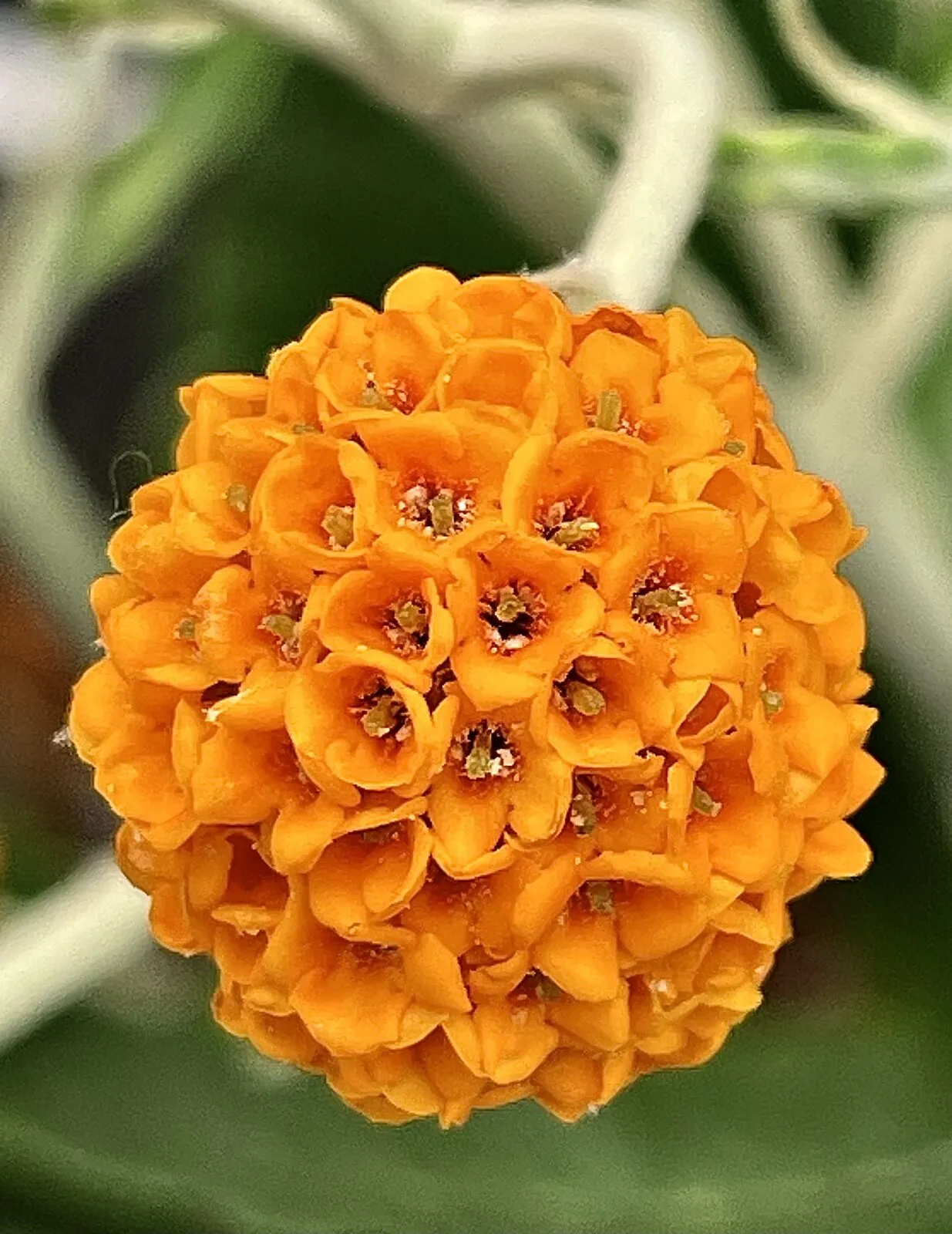
Matico is a tall shrub of central and southern Chile. In late spring it carries dozens of honey-scented, perfectly round heads of small orange flowers above long, wrinkled, grey-green leaves. In Chile it is one of the best known medicinal plants. The leaves go on wounds, burns and sores, and as a tea they are drunk for gastric ulcers, gastritis and stomach pain. Both are old practice among the indigenous peoples of Chile and still common today. Both are recognised by the Chilean health ministry, and both are where most of the research has gone. In Europe it has been a garden shrub since 1774.
This site collects what is known about the plant in one place. It describes the plant and where it grows, explains how it has been used, reports what laboratory and clinical studies have found, gives advice on growing it, and keeps a complete bibliography of the scientific literature, maintained in Zotero.
One note on names. “Matico” is also the name of an unrelated Peruvian plant, Piper aduncum. Everything on this site is about Buddleja globosa only.
Explore
The plant
A tall evergreen shrub of the Chilean Andes with wrinkled grey-green leaves and round, honey-scented heads of orange flowers.
Read moreTraditional use
For well over a century the leaves of matico have been brewed for the stomach and laid on wounds, first by the indigenous peoples of Chile and today by much of rural and urban Chile.
Read moreScience
Around fifty studies since 1979 have looked at matico. Skin and wound healing has the best support, the stomach use rests on tradition and one trial, and the leaf chemistry is dominated by verbascoside.
Read moreCultivation
Matico roots easily from cuttings, tolerates poor soil and light frost, and is grown both as a medicinal crop in Chile and as an ornamental shrub in Europe.
Read moreBibliography
Scientific literature on Buddleja globosa, collected in a Zotero library.
Read more