Cultivation
Matico roots easily from cuttings, tolerates poor soil and light frost, and is grown both as a medicinal crop in Chile and as an ornamental shrub in Europe.
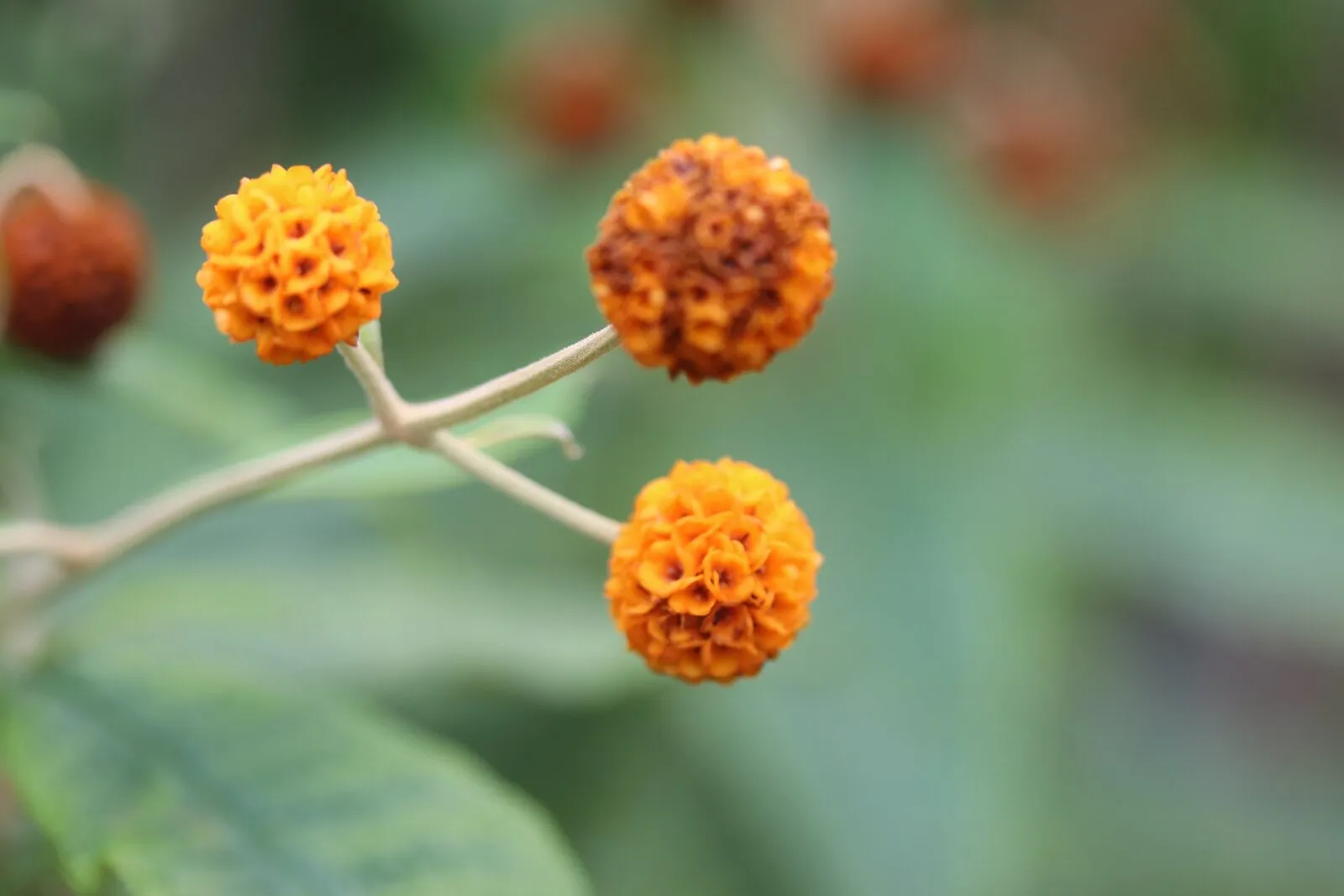
Matico is a forgiving shrub. In its home range it grows on river banks, forest edges and disturbed ground from sea level into the foothills of the Andes, and it has been in European gardens since the eighteenth century. It was the first Buddleja to be grown in Britain, introduced from Chile in 1774, long before the now ubiquitous butterfly bush, Buddleja davidii, arrived from China.
Site and soil
- Sun. Full sun gives the most flower heads. Light shade is tolerated.
- Soil. Any well drained soil, including poor, stony or chalky ground. Wet, compacted soil is the one thing it dislikes.
- Hardiness. Established plants in Europe survive about −10 °C to −15 °C. In cold winters the plant drops its leaves and may die back, then regrows from the base. Young plants benefit from a sheltered wall for their first two or three winters.
- Size. Expect 2 to 4 m in height and width within a few years. Give it room, or plan to prune.
Pruning
Unlike Buddleja davidii, matico flowers on wood made the previous year. Hard pruning in late winter removes the flower buds. Prune lightly immediately after flowering in early summer: cut back the shoots that have flowered by about a third and remove weak or crossing branches. Old, leggy plants can be renovated by cutting one third of the oldest stems to the base each year for three years.
Propagation
Matico is easy to root. In propagation trials at the Universidad de Talca, semi-hardwood cuttings rooted at about 80 percent. Cuttings taken from the tip of the shoot rooted best, a dip in 1,000 to 2,000 ppm indole-3-butyric acid sped up rooting, and a mix of perlite and vermiculite was the most favourable medium (Doll, Vogel & Jeldres 2003).
- Take 10 to 15 cm semi-ripe cuttings in summer, or hardwood cuttings in autumn.
- Remove the lower leaves and halve the remaining large leaves to reduce water loss.
- Insert in a free draining mix and keep humid and shaded until rooted, usually within six to eight weeks.
- Seed is also viable, but seedlings are variable and slower to flower.
Matico as a medicinal crop
Almost all matico leaf sold in Chile was, until recently, gathered from the wild. The rising domestic and export demand has reduced the abundance of the species in parts of its range and produced leaf of very uneven quality (Wilckens et al. 2013). A research programme at the Universidad de Talca therefore studied how to bring the plant into cultivation:
- Accessions. Six wild and cultivated accessions were compared over two seasons. Cultivated accessions yielded more leaf than wild ones, about 0.25 against 0.17 kg of dry leaf per plant, while the content of flavonoids and tannins did not differ significantly between them (Vogel, Razmilic & González 2004).
- Harvests and water. Two harvests per season gave the best leaf yield. Three harvests reduced the yield but raised the proportion of leaf and the flavonoid content. Water stress cut the yield by about a third (Vogel, Razmilic & González 2004).
- Wild against cultivated. A later comparison of wild and cultivated accessions covered morphology, yield and active principles, and confirmed that the species can be grown as a field crop without losing its chemical profile (Vogel et al. 2011).
- Breeding. In Britain, tetraploid plants were induced with colchicine as a step towards new ornamental cultivars (Rose, Kubba & Tobutt 2000).
The practical conclusion of this work is simple. Matico grows well from cuttings of selected mother plants, tolerates drought but yields more with irrigation, and can be cut twice a year. Cultivated leaf takes the pressure off wild populations and gives the processor a uniform raw material.
Harvest and drying
Leaves are picked before or at flowering, when the content of phenolic compounds is highest. They are dried in the shade or in a dryer at low temperature, since heat and light darken the leaf and reduce its phenolic content. Dried leaf keeps for about a year in a closed container away from light.
Wildlife
The honey scented flower heads are visited by bumblebees, honeybees and butterflies, and in southern Chile matico is a nectar source for beekeepers in late spring.