Science
Around fifty studies since 1979 have looked at matico. Skin and wound healing has the best support, the stomach use rests on tradition and one trial, and the leaf chemistry is dominated by verbascoside.
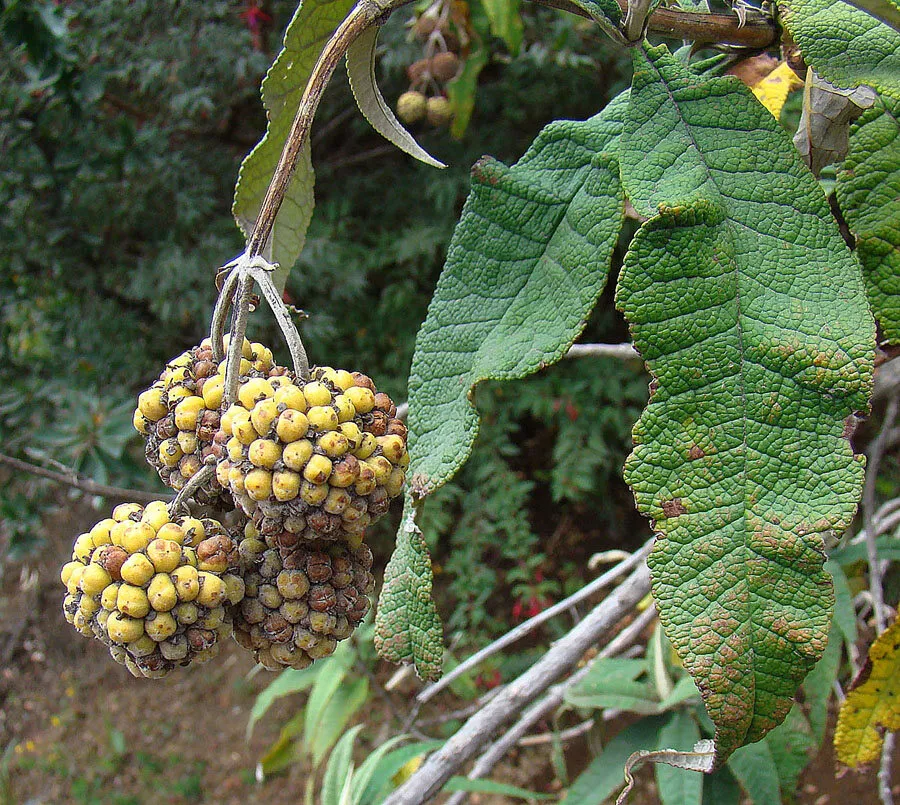
This page summarises published research. Most of it comes from cells and animals, and the few human trials are small. Nothing here is a recommendation to treat an illness with matico.
The state of the evidence
Three reviews published in 2026 take stock of what is known. A systematic review by a Chilean team found 50 primary studies between 1979 and 2026 and catalogued 119 metabolites from the plant (Fuentes-Barros et al. 2026). A second systematic review, limited to studies in English, included 14 experimental studies and 27 bioactive compounds (Becerra et al. 2026). A third review examined the antibacterial evidence for extracts and single compounds (Delgado-Gazzoni et al. 2026). All three reach the same verdict: the traditional uses for wounds and the stomach have plausible laboratory support, the extracts are not standardised, chronic toxicity has never been tested, and only two of the fifty studies are clinical trials.
What is in the leaf
The characteristic compounds of matico leaf are phenylethanoid glycosides, above all verbascoside, also called acteoside, which was first isolated from the plant in 1993 (Pardo et al. 1993). Verbascoside makes up roughly 6 to 11 percent of the dry leaf, and autumn leaves contain about half as much as summer leaves (Becerra et al. 2026). It is accompanied by echinacoside, forsythoside B, isoverbascoside, martynoside and related compounds, and it is proposed as the marker for standardising extracts (Torres-Vega et al. 2021).
Other classes are:
- Flavonoids such as luteolin and apigenin and their glucosides, linarin, rutin and quercetin; the flowers are rich in catechin and epicatechin (Zamorano-Aguilar et al. 2020).
- Iridoids, among them aucubin, the first compound ever isolated from the plant in 1952, catalpol and 6-O-methylcatalpol.
- Terpenes and sterols in the roots, bark and leaf wax: the sesquiterpenes buddledin A, B and C, the diterpenes buddlejone and deoxybuddlejone, amyrins and sitosterol (Mensah et al. 2000).
- Phenolic fatty acid esters in the stem bark (Houghton 1989).
- An essential oil with 1,8-cineole, thymol, carvacrol and caryophyllene, analysed only once (Pellegrini et al. 2017).
Skin and wounds
This is the most consistently documented activity, and the one closest to the traditional use. In the late 1990s a group at King’s College London showed that an aqueous leaf extract protects human skin fibroblasts from oxidative damage at concentrations as low as 1 to 5 µg/mL, while 50 µg/mL is toxic to the same cells (Mensah et al. 1998). Fractionation traced the activity to verbascoside, echinacoside, linarin, luteolin and 6-hydroxyluteolin (Mensah et al. 2001). The extract also pushes keratinocytes towards differentiation rather than proliferation and changes how fibroblasts contract a collagen lattice (Houghton et al. 2005). In rats, a standardised hydroalcoholic extract applied to the skin speeded wound closure, with earlier fibroblast infiltration and better re-epithelialisation (Fuentes-Barros et al. 2026).
Recent work builds matico extract into wound dressings. Scaffolds of chitosan, hyaluronic acid and gelatin loaded with the BG-126 extract reduced bacterial growth and biofilm while remaining compatible with fibroblasts, and improved the control of a mixed Pseudomonas and Staphylococcus infection in mouse wounds (Ceriani et al. 2025; Bahamondez-Canas et al. 2026). A 2026 scaffold increased blood vessel formation in a chronic wound model (Ceriani et al. 2026).
The skin is also where the human evidence lies. Two of the four clinical studies, described below, tested matico preparations on damaged skin: a lotion for the hand-foot syndrome of chemotherapy and a gel against radiation dermatitis. Both found a benefit over placebo (Lara 2011). The 2026 reviews rate wound healing as the activity that has moved furthest from tradition towards evidence.
Stomach and gut
The stomach is the other great traditional use, and here the evidence is thinner. None of the three 2026 reviews found a published animal model of gastric ulcer treated with matico; the systematic review names a gastric ulcer model as one of the experiments that still needs to be done (Fuentes-Barros et al. 2026). What exists is indirect:
- Anti-inflammatory and antioxidant actions that are plausible in the stomach lining as in the skin, described above and below.
- Enzyme inhibition. Leaf and stem bark extracts inhibit beta-glucuronidase, an enzyme linked to gut inflammation, at around 10 µg/mL (Fuentes-Barros et al. 2026).
- Antibacterial hints. Isoverbascoside, a minor leaf compound, inhibits Helicobacter pylori, the bacterium behind most ulcers, in laboratory tests, although verbascoside itself is weak against it (Delgado-Gazzoni et al. 2026).
- A standardised extract. The ethanolic extract BG-126 was developed and patented at the Universidad de Chile for gastric complaints, and it is the extract used in the only internal clinical trial, where it reduced the nausea and abdominal pain caused by the antibiotic nitrofurantoin (Castro 2012).
- Theses. Pharmacological evaluations of the plant for gastric ulcer exist as university theses in Chile and Ecuador, but not as peer-reviewed papers (Medina 2001; Vistin 2015).
So the stomach use is supported by long tradition, official recognition in Chile and a sound mechanism, but it has not been tested in an ulcer model or in patients with ulcers. One reason for caution is that verbascoside is poorly absorbed from the gut, which may matter less for an action on the stomach lining itself than for an effect elsewhere in the body.
Inflammation and pain
Work at the Universidad de Chile tested extracts in standard animal models. Taken orally, a methanolic extract at 600 mg/kg reduced carrageenan-induced paw swelling in guinea pigs by 61 percent, more than naproxen did. Applied to the skin, the less polar fractions, rich in amyrins and sterols, reduced ear swelling by about 80 percent, as much as nimesulide (Backhouse et al. 2008). In pain models the same group found both oral and topical analgesic effects, with the topical preparation in the formalin test outperforming ibuprofen; the effect involved opioid, serotonin and adrenergic pathways (Backhouse et al. 2008). A root extract inhibited both cyclooxygenase and 5-lipoxygenase, and buddledin A was the active compound (Fuentes-Barros et al. 2026).
Antioxidant activity
Antioxidant assays are the most common experiment on matico, appearing in 11 of the 14 studies in one review. The extracts score high in the usual chemical tests, roughly on a par with other phenolic-rich herbs: a cup of matico tea has about the antioxidant capacity of 200 mg of Trolox (Speisky et al. 2006). More interesting are tests in biological systems. The extract protects liver microsomes and red blood cell membranes from oxidative damage (Suwalsky et al. 2017), and it blunts the oxidative stress caused by drugs such as nitrofurantoin, nifurtimox and paracetamol (Letelier et al. 2017). The reviews note that a strong result in a test tube does not predict protection in a cell, and that the key pathways have never been measured directly in a matico system.
Bacteria and fungi
The traditional use on infected wounds raises the question of whether matico kills bacteria. The honest answer is: weakly and inconsistently. An ethanolic extract was bacteriostatic against Staphylococcus aureus and Escherichia coli in the first study (Pardo et al. 1993), aqueous and hydroethanolic extracts inhibit S. aureus at 0.25 to 0.5 mg/mL in some hands and only at 50 mg/mL in others (Hernández et al. 2025), and methanolic extracts did nothing. A spray-dried water-soluble form of the BG-126 extract inhibited Pseudomonas aeruginosa at 0.5 mg/mL and reduced biofilm formation (Araya et al. 2022).
The 2026 antibacterial review concludes that the better evidence is not for killing bacteria but for interfering with them: verbascoside inhibits S. aureus biofilm at a few micrograms per millilitre, blocks virulence factors and toxins, and protects host cells, while forsythoside B makes resistant bacteria up to 64 times more sensitive to antibiotics (Delgado-Gazzoni et al. 2026). Most of these compound data, however, come from commercial standards, not from compounds purified from matico.
Against fungi, buddledin A and B from the bark act on the dermatophytes that cause athlete’s foot and ringworm, but not on Candida or moulds (Mensah et al. 2000).
Other activities
- Parasites. Extracts inhibit the malaria parasite Plasmodium falciparum in vitro at 6 to 9 µg/mL (Debenedetti et al. 2002) and act, less potently than the reference drug, on Trypanosoma cruzi, the cause of Chagas disease (Quintero-Pertuz et al. 2025).
- Platelets. An ethanolic extract inhibits platelet aggregation in human blood at concentrations around 60 µg/mL (Fuentes et al. 2018).
- Liver cells. An aqueous extract and its compounds echinacoside and linarin protected cultured liver cells against toxins in early Japanese work (Fuentes-Barros et al. 2026).
- Cells and ageing. An aqueous extract damped the senescence-associated responses of macrophages under oxidative stress (Bravo-Sagua et al. 2026).
- Nanoparticles and more. The leaf extract has been used to make silver and zinc oxide nanoparticles (Carmona et al. 2017; Vera et al. 2023), and even as a dye for a solar cell (Espinoza-Curilén et al. 2024).
Clinical studies
Four clinical studies have been carried out, all in Chile:
- Hand-foot syndrome in chemotherapy. In 121 patients, a matico lotion added to supportive care gave a greater and statistically significant clinical benefit than a placebo lotion (Lara 2011).
- Skin damage from radiotherapy. In 78 patients, a matico gel reduced the severity and delayed the onset of radiation dermatitis; severe (grade 3) reactions occurred in 2.3 percent with the gel and 8.5 percent with placebo (Lara 2011).
- Side effects of nitrofurantoin. In a double-blind randomised trial in 56 women treated for urinary tract infection, the BG-126 extract taken with the antibiotic cut the incidence of nausea by 47 percent and reduced abdominal pain, with no changes in blood tests (Castro 2012; Letelier et al. 2017).
- Wounds and ulcers. A randomised open-label trial of a matico cream was registered in 2014; its results have not been published (Bustamante 2014).
These are encouraging but small, and all of them use topical or standardised preparations rather than the household infusion.
Safety
The infusion is of low acute toxicity in the standard brine shrimp test, and a standardised extract given to rats did not change blood, kidney or glucose values. Stems are more toxic than leaves. At high concentrations the aqueous extract damages fibroblasts and red blood cells in culture. Two findings deserve attention. An ethanolic extract at high dose disturbed the oestrous cycle of rats and reduced ovulation, and the extract binds oestrogen receptors, so concentrated preparations may have a mild anti-oestrogenic effect (Parada et al. 2014). Verbascoside at high concentration lowers the expression of the liver enzyme CYP2D6, which breaks down many common drugs, so interactions are conceivable (Fuentes-Barros et al. 2026). No study has examined long-term use or use in pregnancy.
Open questions
The reviews list the same gaps: standardised extracts and reporting of plant material; chronic toxicity and genotoxicity studies; models of infected wounds, gastric ulcer and liver injury; dose-finding and then properly powered trials. The deepest problem for any oral use is that verbascoside is barely absorbed from the gut, about 4 percent in dogs, which argues for topical use or for formulations that improve absorption (Becerra et al. 2026).